Global Uncertainty Reshapes Dubai's Startup Ambitions as ...
Rising tensions in the Middle East and economic headwinds in key markets are forcing local founders to rethink funding strategies and expansion plans across Dubai's booming tech corridors.
Rising tensions in the Middle East and economic headwinds in key markets are forcing local founders to rethink funding strategies and expansion plans across Dubai's booming tech corridors.
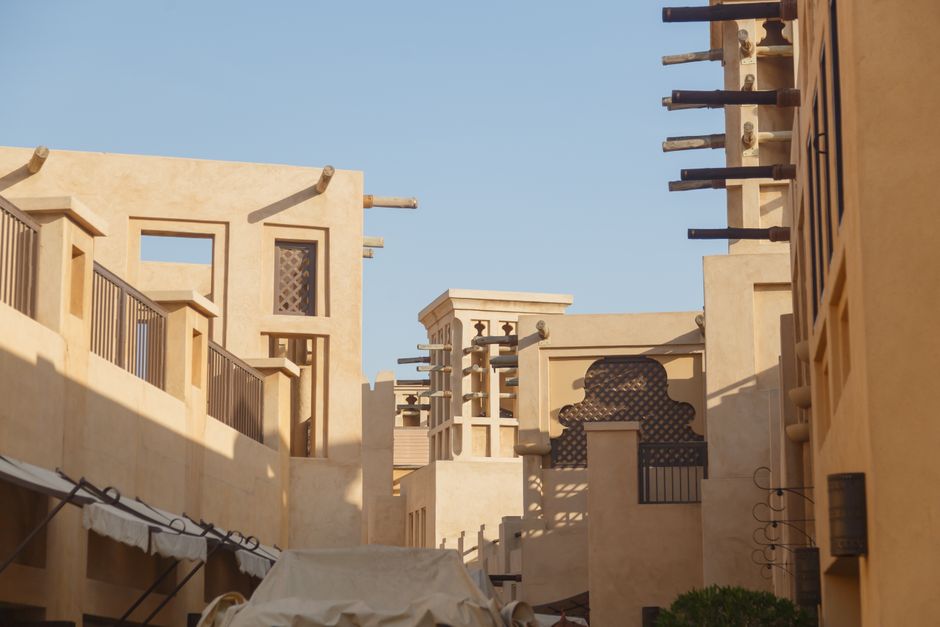
Dubai's startup ecosystem is navigating a treacherous global landscape as geopolitical volatility and international economic uncertainty begin to reshape investment patterns and growth trajectories in the emirate's innovation hubs.
The ripple effects are already visible across DTEC (Dubai Technology and Free Zone Enterprise), where over 8,400 companies operate, and in the emerging innovation clusters around Dubai Silicon Oasis and Jumeirah Lake Towers. Founders and venture capitalists operating in these spaces are increasingly cautious about cross-border expansion and international partnership structures, particularly those involving exposure to volatile regions or heavily sanctioned markets.
"We're seeing a bifurcation in how investors evaluate risk," explains the sentiment echoing through co-working spaces along Sheikh Zayed Road, where most early-stage pitch meetings occur. Startups with primarily regional ambitions—leveraging Dubai's position as a gateway to African and Asian markets—are attracting steady interest. However, those with heavy Western exposure or complex global supply chains are facing harder questions about geopolitical hedging and regulatory exposure.
The impact extends to talent acquisition. Several Dubai-based fintech and software companies have reported increased difficulty recruiting engineers from conflict-adjacent regions, while visa sponsorship timelines for key personnel have extended by 4-6 weeks in some cases. This directly affects the 2,000+ tech startups currently operating across free zones, many of which depend on international talent pipelines to maintain competitiveness.
Funding patterns reflect the anxiety. According to venture capital activity tracked through Dubai's regulatory bodies, the average Series A round size in the emirate declined 12% year-on-year, while Series Seed investments actually stabilized—suggesting investors are moving capital to proven, lower-risk local teams rather than betting on ambitious international expansion strategies.
The pressure has prompted a strategic shift toward "hub-and-spoke" models, where Dubai serves as the operational base for regional expansion into Southeast Asia and Africa, rather than as a launching pad for global markets. This plays directly into the emirate's long-term positioning, but it also means slower scaling timelines and more modest valuations for startups that once dreamed of rapid worldwide growth.
E-commerce, logistics, and digital payments companies with strong intra-regional networks are weathering the storm better than those dependent on European or North American partnerships. This divergence will likely persist as long as global uncertainties remain elevated, fundamentally reshaping which startups thrive in Dubai's innovation districts over the next 12-24 months.
This article was compiled by AI and screened before publishing. See our editorial standards.
How does this story make you feel?
Spread the word
About this article
Published by The Daily Dubai
Daily brief
Free, in your inbox before 7am. Weekdays.
More in Business


