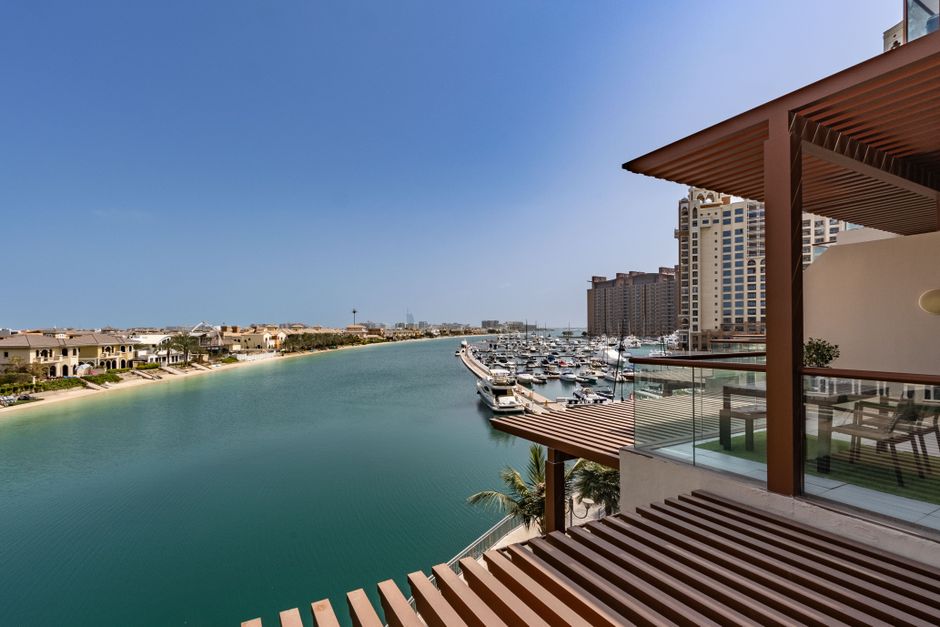
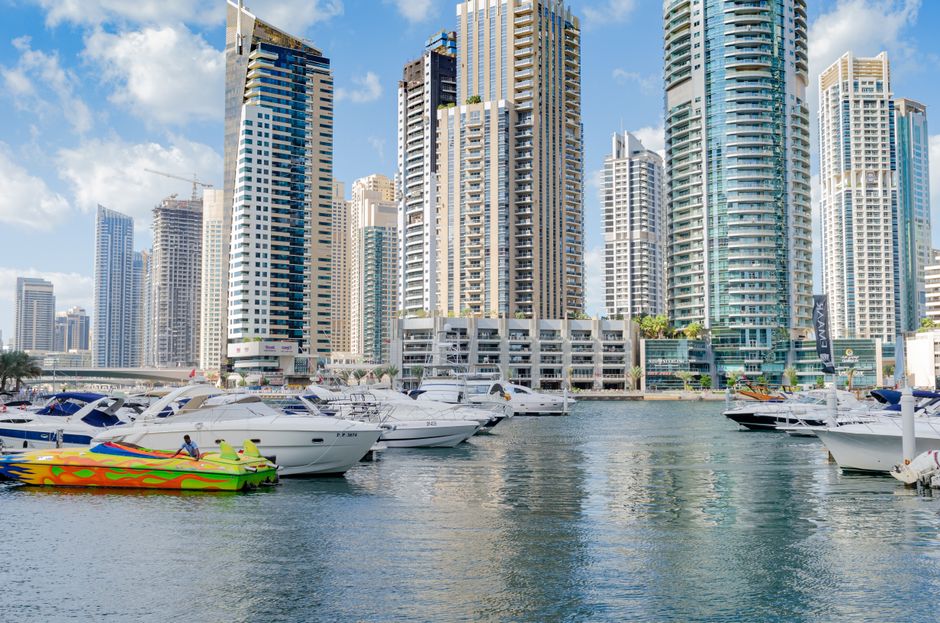
Dubai's property market is telling two distinct stories as we move through the first half of 2024. While mid-market residential segments face headwinds from rising interest rates and affordability pressures, the ultra-luxury corridor—particularly along the Palm Jumeirah and in Downtown Dubai's most coveted towers—continues to defy broader market sentiment with remarkable price resilience.
Recent transaction data reveals that waterfront villas on the Palm's outer crescent have reached an average of AED 15,000 to AED 18,000 per square metre for premium properties, representing a 6-8% appreciation year-on-year. A particularly notable transaction saw a seven-bedroom mansion on Palm Jumeirah's West Beach Command sell for AED 28.5 million—equivalent to AED 16,500 per square metre—demonstrating sustained appetite among high-net-worth buyers unfazed by market cyclicality.
The contrast becomes sharper when examining mainstream residential pockets. Properties in Arabian Ranches and Jumeirah Village Circle (JVC) have experienced modest price corrections of 2-3% over the past six months, while rental yields have compressed from historical averages of 5-6% to 4-4.5%, signalling a recalibration of buyer expectations across the broader market.
Downtown Dubai's flagship developments tell a similarly bifurcated story. High-floor apartments in Burj Khalifa with unobstructed Burj views command premium valuations holding steady at AED 14,000-AED 16,000 per square metre, yet comparable mid-range units in Downtown's secondary towers have moderated by approximately 4% as investor sentiment becomes more selective about micro-location premiums.
Industry analysts attribute this divergence to several factors. International buyers—particularly from the Gulf Cooperation Council nations, Russia, and Asia—continue viewing Dubai's ultra-luxury segment as a stable wealth-preservation vehicle, insulated from domestic affordability constraints. Simultaneously, the local investor cohort has become increasingly discerning, gravitating toward properties with genuine income-generation potential rather than speculative appreciation.
The Market's supply dynamics also warrant attention. Limited new ultra-luxury inventory—particularly waterfront villa stock—maintains pricing pressure in premium segments, while mainstream developments continue absorbing newly completed units from recent launches across Business Bay, Downtown, and suburban communities.
Dubai's real estate cycle appears to be naturally selecting for quality and location. For sellers holding trophy assets in established luxury precincts, market conditions remain favourable. For mainstream property holders or prospective buyers, the window for negotiation has materially widened as seller discipline softens in less-coveted segments.
This article was compiled by AI from the sources linked above and screened before publishing. See our editorial standards.