Dubai Metro Routes: Discover Each Neighbourhood's Soul
Explore how Dubai's metro commute patterns reveal the unique character of Marina, Deira, and beyond. Your daily journey tells the city's story.
Explore how Dubai's metro commute patterns reveal the unique character of Marina, Deira, and beyond. Your daily journey tells the city's story.
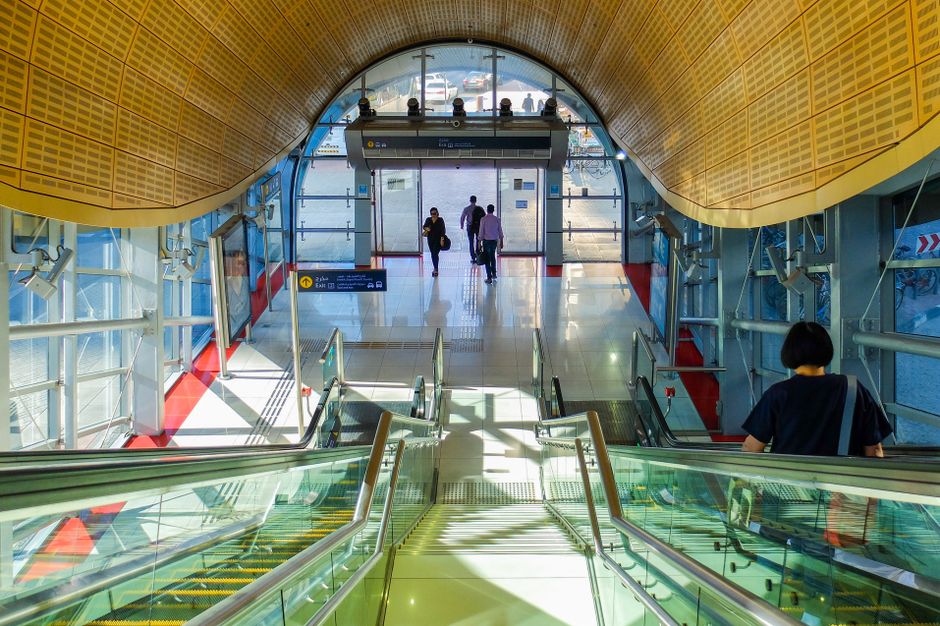
The 7:15 a.m. Red Line metro train from Rashidiya carries a particular energy. Office workers in business casual cluster near the doors, scrolling through phones, while students heading to universities along Sheikh Zayed Road occupy the middle sections with their characteristic morning lethargy. But step off at Bur Dubai station, and the neighbourhood's centuries-old trading spirit becomes immediately apparent. The station spills directly into the textile souks, where merchants are already arranging bolts of fabric and calling out to regular customers—many of whom have been commuting this same route for decades.
This is what makes studying Dubai's commute patterns so revealing. The city's transport infrastructure doesn't just move people; it illuminates the distinct personality of each area.
Take the Boulevard on Sheikh Zayed Road. The afternoon crawl heading south towards Downtown—clogged with office commuters from the Emirates Towers and DIFC—reflects a neighbourhood defined by corporate ambition and relentless productivity. The bus stops here are efficient, functional, designed for speed. Compare that to the more relaxed vibe around Al Manara in Jumeirah, where residents lingering at bus stops chat openly, where school runs dominate the morning schedule, and where the commute pace feels markedly slower, more community-oriented.
The RTA's latest figures show that the metro carries roughly 1.6 million passengers daily, but those numbers mask fascinating neighbourhood-level patterns. In Deira, the Gold Souk metro station acts as a genuine community hub—not just a transit point. Regulars gather, exchange news, conduct business. The commute here is social, intergenerational. Grandparents pick up grandchildren, merchants discuss the day ahead.
Meanwhile, in Business Bay, the same metro system serves a fundamentally different function: efficient transit for a highly transient workforce. The neighbourhood's commute character reflects its nature as a corporate corridor, where people arrive, work, and depart with minimal community interaction.
Dubai's bus network tells similar stories. The routes threading through Karama, Satwa, and Al Quoz reveal dense, walkable neighbourhoods where commuting is embedded in daily community life—stopping for coffee at familiar cafes, checking in with shop owners, crossing paths with neighbours. The RTA operates over 100 bus routes, and each one carries the cultural imprint of its neighbourhood.
What emerges is clear: in Dubai, how you commute and where you commute reveal not just logistics, but the authentic character of your neighbourhood. The journey itself becomes a window into community soul.
This article was compiled by AI and screened before publishing. See our editorial standards.
How does this story make you feel?
Spread the word
About this article
Published by The Daily Dubai
Daily brief
Free, in your inbox before 7am. Weekdays.
More in lifestyle