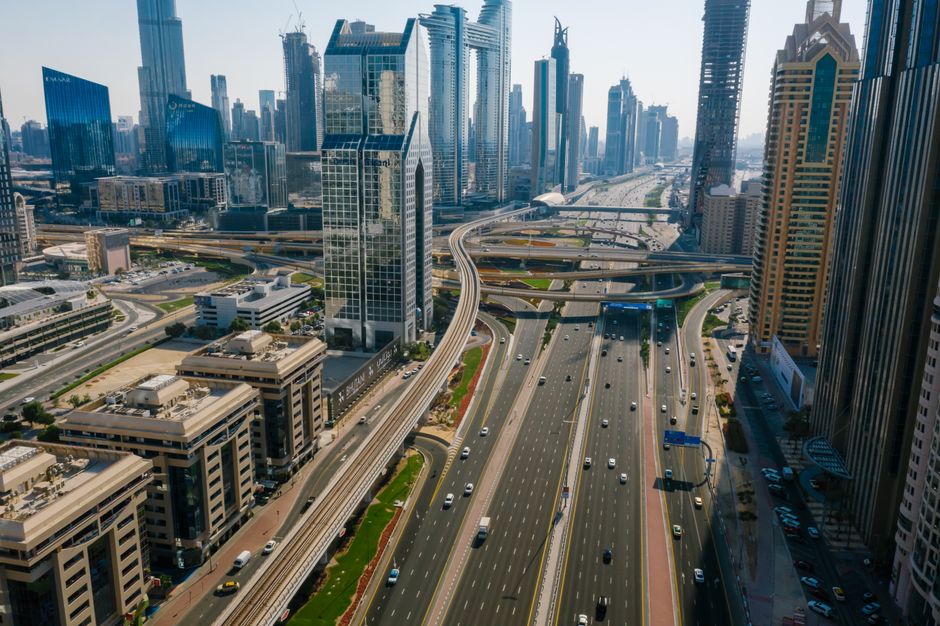
Farhan Malik logged into his Dubai Marina-based real estate listing service on a Tuesday morning in late June and found twelve property photos had been silently replaced with near-identical stock images. The original shots — taken by a hired photographer at Emaar's Harbour Views towers — were gone. In their place: generic Gulf-coast apartment interiors that could have been anywhere from JLT to Jakarta.
Malik is not alone. Across Dubai, community group administrators, small business owners and freelance photographers are reporting that digital platforms relying on AI-driven duplicate-detection algorithms are replacing what they consider irreplaceable original images with visually similar alternatives from centralised content libraries — often without a single notification sent to the account holder.
The issue has landed with particular force here because of the sheer density of visual content tied to Dubai's property, hospitality and events economy. The emirate's real estate sector alone processed more than 180,000 transactions in 2025, according to the Dubai Land Department's annual market report, generating an enormous volume of listing photography that is continuously cycled through automated platform pipelines.
Where the Complaints Are Coming From
Community voices are concentrated in a handful of sectors. Wedding photographers working out of studios in Al Quoz Industrial Area 4 say client galleries hosted on third-party platforms have been hit. Food and beverage operators along Jumeirah Beach Road report that Google Business profile images uploaded months ago have been substituted. Freelancers who sell stock images through regional aggregators say their original submissions are being flagged as duplicates of their own previously uploaded work — then pulled.
At the Dubai Design District, a cluster of creative agencies has been circulating an informal letter among members of d3's tenant community urging platforms to provide manual override mechanisms before the problem scales further. The Dubai Chamber of Digital Economy, which oversees the emirate's push to onboard 300 digital companies by 2027 under the Dubai Digital Economy Strategy, has not issued a formal response as of publication time.
The practical consequences run wider than aesthetics. Under UAE Federal Law No. 38 of 2021 on intellectual property rights, the creator of an original image retains moral rights in that work — meaning an automated substitution could, in principle, constitute a violation of attribution rights even when the replacing image is technically licensed. Legal practitioners in the DIFC have begun fielding preliminary queries on exactly this question, though no formal case has yet been filed in the DIFC Courts.
What Platforms Are Doing — and Not Doing
The duplicate-detection systems causing the most reported disruption are not new. Perceptual hashing, a technique that assigns a fingerprint to an image based on visual structure rather than exact pixel data, has been used by major platforms since the early 2010s. What has changed is the aggressiveness of the thresholds. Platforms competing on storage costs and content moderation compliance have tightened their similarity parameters, meaning images that differ by minor colour grading or cropping — precisely the kind of adjustments a professional photographer makes — can now trigger an automatic replacement event.
Dubai-based digital marketing agency Pulse Bureau, which manages social and listing content for roughly 40 hospitality clients across Downtown Dubai and Business Bay, estimated internally that around 8 percent of their managed image assets had been affected in a rolling 90-day window ending in June 2026. The agency says it has added a manual audit step every two weeks as a precaution.
For individuals and businesses navigating this now, practitioners in the Dubai creative community are converging on a handful of practical steps: embed metadata with creation dates and GPS coordinates before upload, keep local RAW or high-resolution backups on a separate server, and register commercially sensitive images with the UAE Ministry of Economy's IP portal before publishing to any third-party platform. Some are also watermarking master files — an old tool finding renewed relevance.
The deeper concern is systemic. As Dubai positions itself as a regional hub for AI-driven commerce and the Expo 2020 legacy district at Dubai South continues to attract technology tenants, the tension between automated efficiency and creator rights is only going to sharpen. Platform accountability, for now, remains the missing piece.