New megaprojects reshape Dubai's affordable housing ...
As developers race to deliver thousands of units across emerging clusters, middle-income buyers face a critical window to lock in prices before spillover effects reshape entire neighbourhoods.
As developers race to deliver thousands of units across emerging clusters, middle-income buyers face a critical window to lock in prices before spillover effects reshape entire neighbourhoods.
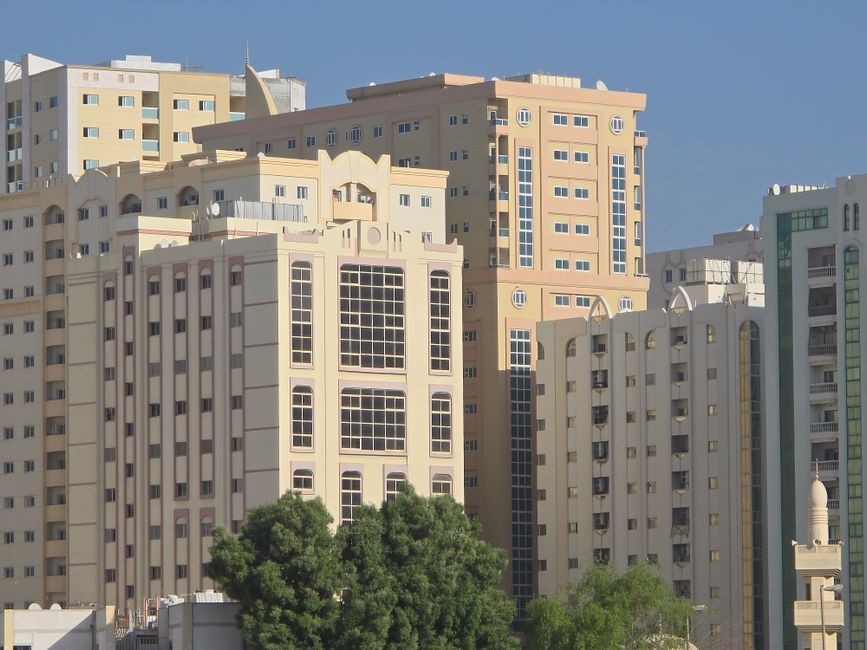
Dubai's property market is experiencing a spatial reckoning. While Downtown Dubai and Palm Jumeirah command premiums above AED 2,500 per square foot, a cluster of major developments across Jumeirah Village Circle, Dubai Sports City, and the emerging Ras Al Khor waterfront are fundamentally reshaping where affordable housing sits—and what it will cost in 18 months' time.
The scale is staggering. Approximately 8,000 units are under construction across JVC and JLT alone, with completion windows spanning 2027–2029. Real estate agencies report that Studios and one-bedrooms in JVC currently trade between AED 900–1,200 per square foot, comfortably below the city average of AED 1,600. However, recent transaction data reveals a subtle but accelerating shift: prices in JVC have climbed 7–9% year-on-year as investors anticipate infrastructure spillover from the nearby Expo City precinct and planned metro extensions.
The infrastructure narrative is critical. The Roads and Transport Authority's ongoing enhancements to connectivity between JVC and Downtown, coupled with new retail anchors and office zones in Dubai Sports City, are magnetising both owner-occupiers and yield-hunters. Mid-range properties in JLT—traditionally yielding 4–5% annually—are now seeing rental appetite spike as corporate relocations accelerate.
But here's the tension: affordability gains are compressing. Three years ago, a two-bedroom villa in Arabian Ranches II commanded AED 1,200 per square foot. Today, comparable units trade at AED 1,450. New villa clusters in Damac Hills and Akoya Oxygen, anchored by the Sustainable City initiative, are pricing at AED 1,350–1,600, cannibalising traditional mid-market segments.
The golden visa programme remains a wild card. Ten-year residency incentives have catalysed demand from diaspora investors seeking long-term stability, particularly in family-oriented communities like JVC, where schools, parks, and retail clustering justify premium positioning over pure investment metrics.
Market observers note a bifurcation emerging: ultra-premium coastal assets continue appreciating independently, while mid-market absorption depends entirely on neighbourhood maturation. For buyers, the window to capture value before major projects complete—and comparable pricing normalises—is narrowing. Agents report a rush of end-user purchases in Q2, signalling that market participants recognise the inflection point.
The verdict? New megaprojects are not democratising Dubai's property ladder; they're redirecting it. Savvy investors understand that neighbourhood-level infrastructure announcements now precede price corrections by 12–16 months. In this market, timing trumps location.
This article was compiled by AI and screened before publishing. See our editorial standards.
How does this story make you feel?
Spread the word
About this article
Published by The Daily Dubai
Daily brief
Free, in your inbox before 7am. Weekdays.
More in Property