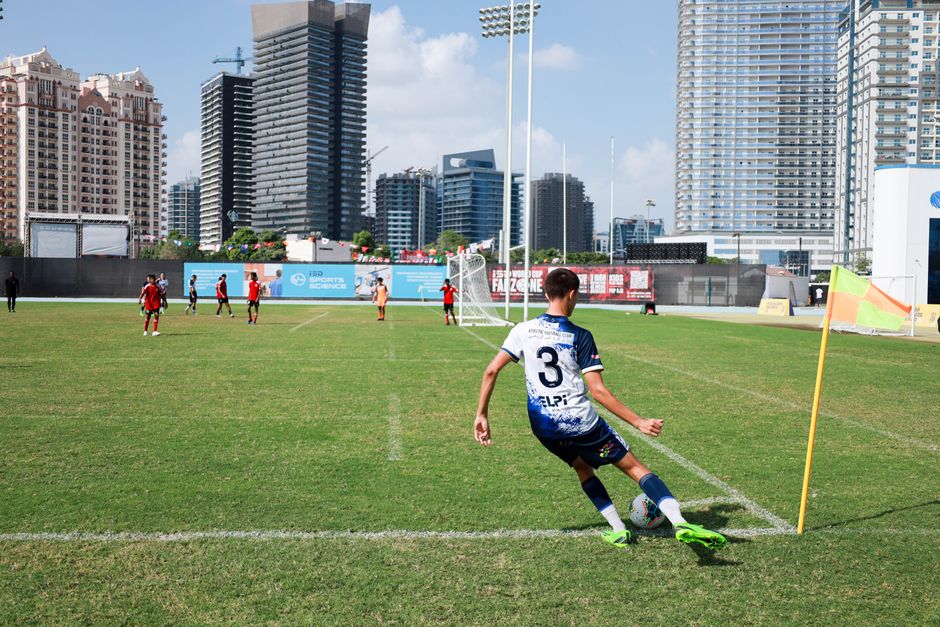
Football in Dubai has never been just about winning matches. Today, as the emirate's local clubs continue to establish themselves as serious competitors in regional tournaments, they're simultaneously transforming into community anchors—creating spaces where residents forge lasting connections, develop skills, and find belonging in a rapidly evolving city.
The revival of grassroots football has been particularly visible in neighbourhoods like Al Wasl and Deira, where community-run academies now operate during evening hours, offering subsidised coaching to young players from diverse backgrounds. Monthly coaching fees ranging from AED 150 to AED 400 have made the sport accessible to families who might otherwise struggle to afford structured training. These initiatives have registered nearly 2,500 youth participants this season alone—a significant uptick from previous years.
Maktoum Stadium in Jebel Ali continues to serve as the emotional heartbeat for local football enthusiasts. Weekend matches regularly draw 3,000 to 5,000 spectators, transforming the venue into a gathering place where families from Business Bay to Satwa converge to celebrate their teams. The atmosphere extends beyond ninety minutes; local café owners near the stadium report increased footfall on match days, while vendors selling refreshments and memorabilia have built small livelihoods around the fixture calendar.
What's most compelling is how clubs have integrated themselves into neighbourhood initiatives. Several teams now partner with local schools across Dubai Marina and Umm Suqeim, organising weekly coaching clinics and donating equipment to underfunded programmes. The Al Wasl Sports Club Foundation, for instance, has committed to training 500 children annually from underserved areas, breaking down barriers that traditionally kept football as an elite pursuit.
Female participation has also surged, with dedicated women's teams now competing in official league structures. This shift reflects broader changes in how Dubai's diverse population engages with sport—no longer as passive spectators, but as active participants in club life.
Beyond the obvious health benefits, these clubs are fostering genuine social cohesion. In a city where residents hail from over 200 nationalities, football provides a universal language. Teams function as informal support networks, with older players mentoring younger ones, and match days creating touchstones in otherwise fragmented community calendars.
As Dubai's football ecosystem matures, it's clear that the real victory isn't measured solely in league standings. It's in the teenager from Sonapur who discovered confidence through sport, the families who found community through matchday traditions, and the neighbourhoods transformed by the simple magic of a football pitch.
This article was compiled by AI from the sources linked above and screened before publishing. See our editorial standards.