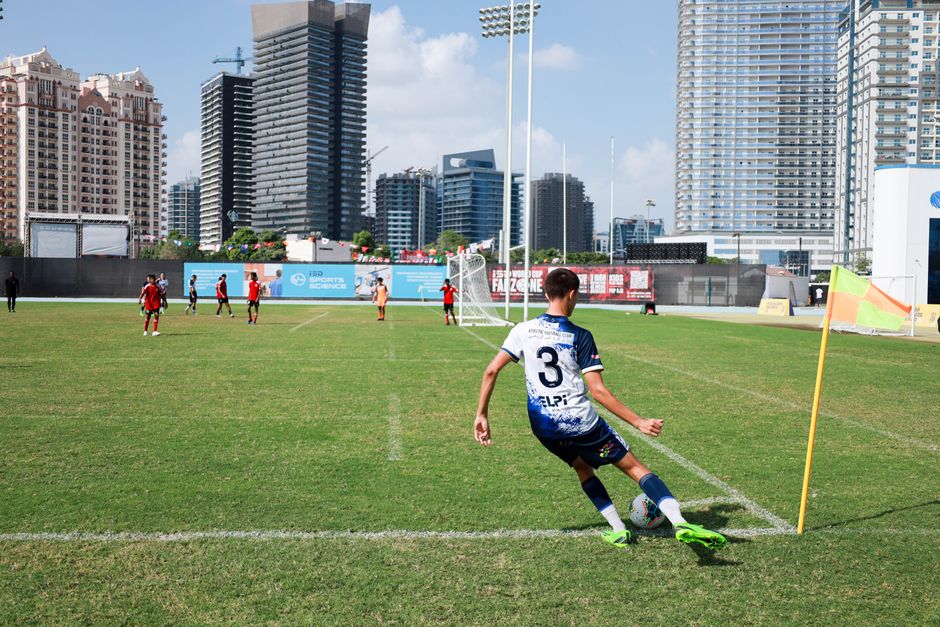
Walk into Ghaf Park in Sustainable City any Friday evening and you'll find dozens of amateur football teams warming up across perfectly manicured pitches. This scene—unthinkable a decade ago—now repeats across Dubai's neighbourhoods, powered by a quiet infrastructure revolution that's reshaping how the emirate's residents engage with recreational sport.
The transformation is quantifiable. Dubai now hosts over 40 dedicated sports facilities catering to amateur clubs, up from just 15 in 2018. Investment in recreational infrastructure has reached approximately AED 2.3 billion, with municipal authorities allocating 18 per cent of their annual capital budget to grassroots sporting venues.
The Sevens Stadium precinct remains the flagship. While professional rugby dominates headlines, the adjoining facilities welcome amateur volleyball, badminton, and futsal leagues five nights weekly. Monthly membership for amateur clubs averages AED 3,500 to AED 6,000, making organised sport increasingly accessible beyond the ultra-wealthy expatriate enclaves.
But the real game-changer sits in neighbourhood clusters. Jebel Ali Sports Park now operates eight synthetic cricket pitches alongside tennis courts, with waiting lists stretching six months for summer league spots. Similar hubs in Arabian Ranches, Dubai Hills Estate, and Deira cater to 12,000-plus amateur players across football, cricket, basketball, and netball. The Al Baraha Sports Complex, renovated in 2024, doubled its badminton court capacity to 16 courts, directly responding to 340 per cent growth in recreational badminton registrations since 2021.
Infrastructure expansion extends beyond traditional venues. Beach volleyball has exploded along Kite Beach and Sunset Beach, with four permanent club facilities now supporting 23 registered leagues. Winter temperatures make Dubai uniquely suited to year-round outdoor competition—a factor driving 28 per cent more participation than comparable Middle Eastern cities.
Yet challenges persist. Peak-hour bottlenecks remain at premium facilities, and facility costs still exceed regional averages. A standard football pitch rental runs AED 800–1,200 per hour—pricing that excludes many working-class amateur players despite Dubai's wealth reputation.
Still, momentum accelerates. The Dubai Sports Council's 2026 strategic plan targets 52 dedicated amateur facilities by 2028, with AED 1.8 billion earmarked for construction. Critically, 30 per cent of new venues will operate in underserved areas including Sonapur, Jebel Ali Industrial, and Mirdif—reflecting genuine democratisation ambitions.
For amateur athletes, Dubai's infrastructure investment signals a paradigm shift: sport here is no longer exclusively for professionals or the privileged. It's increasingly becoming a genuine community pursuit.
This article was compiled by AI from the sources linked above and screened before publishing. See our editorial standards.