Why Dubai's Fintech Scene Stands Apart: The Blueprint for Global Financial Innovation
A unique convergence of regulatory innovation, multicultural talent, and strategic geography is positioning the Emirates as a fintech powerhouse unlike any other.
A unique convergence of regulatory innovation, multicultural talent, and strategic geography is positioning the Emirates as a fintech powerhouse unlike any other.
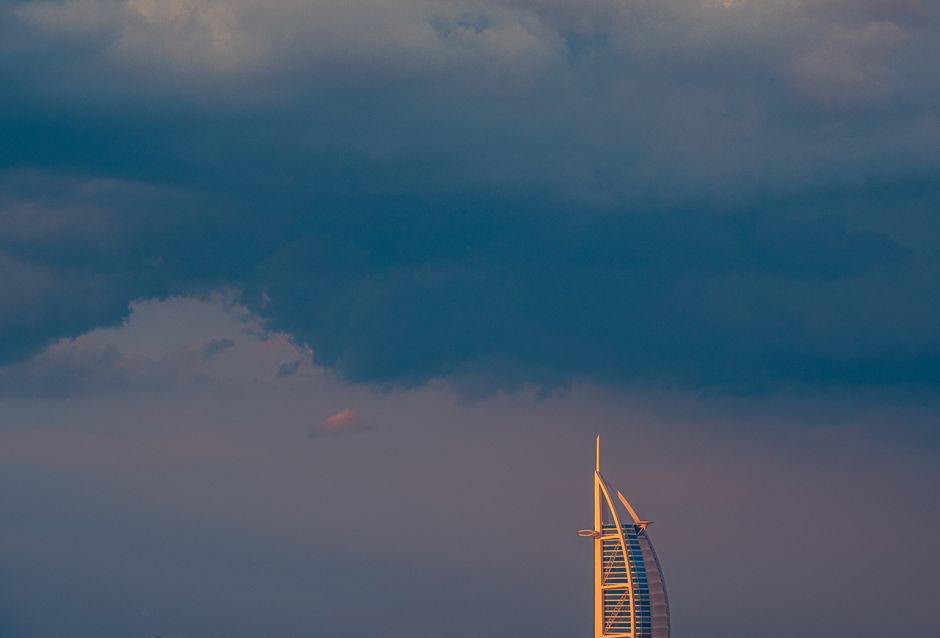
Dubai's fintech ecosystem has quietly become one of the world's most distinctive—not by copying Silicon Valley's playbook, but by writing its own. The difference lies in what makes this city fundamentally different: a regulatory environment designed for speed, a geographic position bridging three continents, and a financial sector built on international mobility.
The Dubai International Financial Centre (DIFC) in Downtown Dubai has emerged as the engine driving this transformation. With over 3,000 registered companies and a regulatory framework modelled on common law rather than civil law, the DIFC operates at a velocity that traditional banking centres struggle to match. In 2025, the DIFC processed more cross-border transactions than many established financial hubs, with fintech firms reducing settlement times from days to minutes.
What distinguishes Dubai from competitors like Singapore or London is the city's explicit commitment to experimentation. The DIFC's regulatory sandbox allows companies to operate outside traditional frameworks for defined periods—a model that has attracted over 150 active fintech startups, many focused on Islamic finance innovation and remittance technology. This matters enormously: the UAE handles approximately $30 billion in annual remittances, making efficient cross-border payments not a nice-to-have but an economic imperative.
The Jumeirah Lake Towers district and Silicon Oasis have become secondary clusters, attracting software engineers and product teams from across Asia, Europe, and Africa. Unlike homogeneous tech hubs, Dubai's fintech workforce reflects its diaspora—Pakistani payment specialists, Indian blockchain engineers, Lebanese forex traders, and British compliance experts collaborate on solutions addressing genuinely global problems. This diversity isn't incidental; it's architectural.
Infrastructure costs tell another story. Office space in the DIFC runs roughly AED 2,500 per square metre annually—competitive with emerging markets but attached to world-class connectivity. The city's position as a logistics and aviation hub means physical infrastructure for cryptocurrency trading, gold settlement, and trade finance naturally clusters here.
Perhaps most distinctively, Dubai's fintech leaders are solving problems others haven't yet identified. Islamic finance represents 25 percent of global financial assets, yet most fintech innovation ignores it entirely. Here, companies are building Sharia-compliant decentralised finance platforms, sukuk tokenisation systems, and zakat payment networks. These aren't niche products—they're addressing trillions of dollars in underserved capital.
The city's geopolitical position—neither fully Western nor Eastern—allows it to bridge markets that rarely collaborate. Iranian, Chinese, Indian, and European financial institutions operate here alongside American tech giants. This creates natural cross-pollination impossible elsewhere.
Dubai's fintech distinctiveness isn't about being bigger. It's about being structurally different—a city built to move capital efficiently across borders, cultures, and belief systems. That's a template the world is beginning to notice.
This article was compiled by AI and screened before publishing. See our editorial standards.
How does this story make you feel?
Spread the word
About this article
Published by The Daily Dubai
Daily brief
Free, in your inbox before 7am. Weekdays.
More in tech


