Dubai's Green Tech Pipeline: What's Coming Next in the Race for Net-Zero
From advanced battery storage to solar-powered infrastructure, emerging technologies set to reshape the emirate's sustainability roadmap over the next five years.
From advanced battery storage to solar-powered infrastructure, emerging technologies set to reshape the emirate's sustainability roadmap over the next five years.
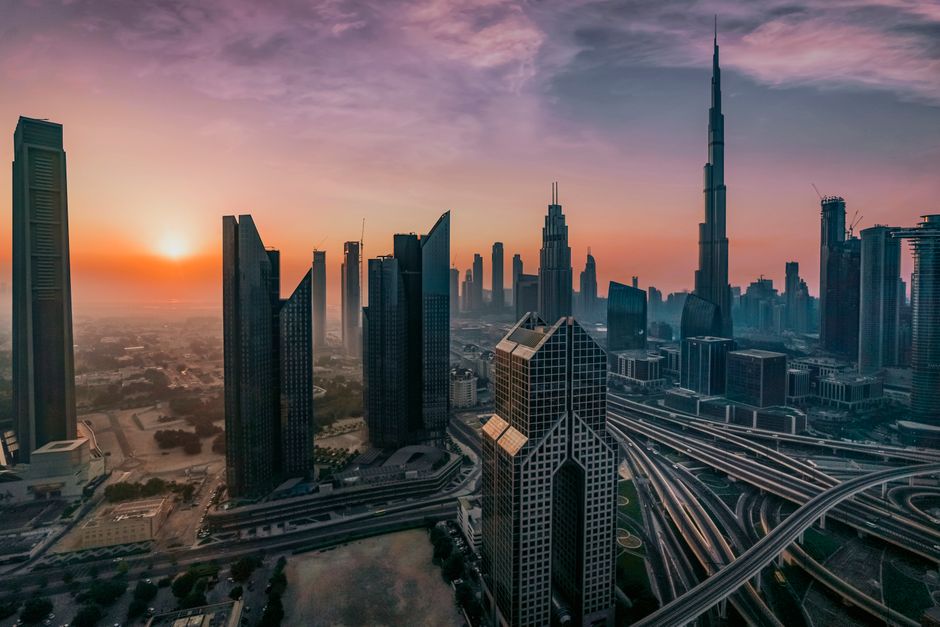
Dubai's clean energy ambitions are entering a critical phase. With the emirate already home to the Mohammed bin Rashid Al Maktoum Solar Park and positioned as a regional innovation hub, industry insiders are now tracking the next generation of green technologies poised to transform both the built environment and energy systems across the city.
The most significant development on the horizon centres on next-generation battery storage and grid management systems. Several major technology firms have established research facilities in Dubai Silicon Oasis, where teams are refining solid-state battery prototypes that could increase energy density by up to 40 per cent compared to current lithium-ion systems. These advances are critical for stabilising Dubai's growing renewable capacity, particularly as solar deployment accelerates beyond the current 2,900 megawatts targeted by 2030.
Green hydrogen infrastructure represents another focal point. Developers are planning pilot production facilities near Jebel Ali Port, with commercialisation timelines pointing to 2028-2029. This technology could decarbonise heavy industries and long-haul transport—sectors that have proven challenging for electrification. Early estimates suggest production costs could fall by 30 per cent within three years as manufacturing scales.
In the built environment, smart building systems integrating AI-driven energy optimisation are moving from demonstration projects to mainstream deployment. Buildings across the Business Bay and Downtown Dubai corridors are trialling systems that reduce HVAC energy consumption by 25-35 per cent through real-time demand response and predictive analytics. Several developers have signalled plans to retrofit existing structures with these technologies, potentially affecting thousands of commercial and residential units.
Seawater desalination powered by renewable energy is also advancing rapidly. New reverse osmosis plants utilising solar and wind power are in advanced planning stages, addressing the emirate's water-energy nexus—a pressing concern in an arid climate where desalination accounts for roughly 40 per cent of electricity demand.
Perhaps most ambitiously, the emirate is exploring advanced cooling technologies for district cooling systems that serve major developments. Phase-change materials and evaporative cooling hybrids currently in testing could reduce district cooling energy intensity by up to 20 per cent by 2029.
The Dubai Clean Energy Strategy 2050 provides the policy backbone for these initiatives, though industry observers note implementation speed will determine whether ambitious targets become reality. Government procurement policies and private sector investment appetite remain critical variables in the coming 18-24 months, when several pilot projects are expected to transition toward full-scale commercial deployment.
This article was compiled by AI and screened before publishing. See our editorial standards.
How does this story make you feel?
Spread the word
About this article
Published by The Daily Dubai
Daily brief
Free, in your inbox before 7am. Weekdays.
More in tech


