Dubai's First and Last Mile Problem: How Commuters Are Finally Winning
As ride-sharing costs climb and metro crowding peaks, residents are embracing micro-mobility solutions that are quietly reshaping how we navigate the city's neighbourhoods.
As ride-sharing costs climb and metro crowding peaks, residents are embracing micro-mobility solutions that are quietly reshaping how we navigate the city's neighbourhoods.
Walk down Sheikh Zayed Road during rush hour, and you'll spot something that felt unthinkable five years ago: groups of professionals gliding past gridlocked traffic on electric scooters. The scene has become so commonplace that it barely registers anymore. But this shift represents something far more significant than a passing trend. Dubai's transport ecosystem is undergoing a fundamental transformation, driven by frustration, innovation, and the stubborn reality that traditional commuting no longer cuts it.
The numbers tell the story. Dubai Metro ridership exceeded 560 million trips in 2025, yet capacity constraints remain acute during peak hours. Meanwhile, ride-sharing prices have climbed steadily—a 15-minute journey from Downtown to Business Bay now routinely costs 35-45 AED during morning rush. For cost-conscious professionals, the mathematics became impossible to ignore. Enter the micro-mobility revolution.
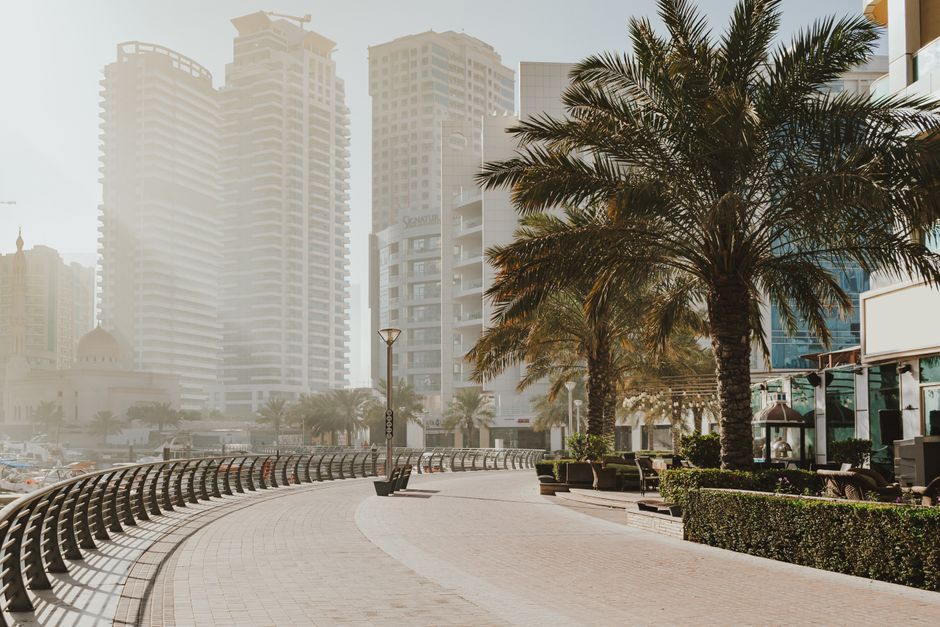
The Licensed e-scooter scheme, officially regularised in 2024, has proliferated across Dubai's neighbourhoods. Al Wasl, Jumeirah, and the Dubai Marina waterfront now support dedicated scooter lanes. Careem and Uber have both integrated scooter-sharing into their apps, capitalising on commuters seeking alternatives to traditional ride-hailing. A 3-kilometre scooter journey costs roughly 8-12 AED—a third of the equivalent taxi fare.
But the real innovation happening quietly on the ground tells a different story. Neighbourhood hubs like the Safa Park area and Al Quoz have experienced a renaissance as 'mobility villages'—clusters of residential, co-working, and retail spaces designed specifically for car-light living. The emerging pattern clusters employment around metro stations: Business Bay, DIFC, and the Knowledge Village increasingly attract companies precisely because proximity to public transit reduces employee commuting friction.
Cycling infrastructure is expanding too. The Dubai Municipality's ongoing cycle track network additions—particularly along Al Wasl Road and connecting to JBR Beach—reflect recognition that last-mile solutions must accommodate diverse commuters. Bike-share usage jumped 34 per cent year-on-year through 2025.
What's genuinely shifting is the cultural narrative. The five-year-old executive who once measured status by vehicle horsepower now considers commute time and urban agility as defining metrics. Neighbourhood newsletters increasingly celebrate 'scooter-friendly' amenities. Real estate developers now market proximity to metro stations rather than parking availability.
Dubai's transport evolution isn't about choosing one solution. Rather, it's about acknowledging that our sprawling, car-dependent model was never sustainable. By making smaller neighbourhoods more liveable and journey flexibility easier, the city is slowly—and maybe unintentionally—becoming less about getting from A to B, and more about whether you even need to travel so far in the first place.
This article was compiled by AI from the sources linked above and screened before publishing. See our editorial standards.
How does this story make you feel?
Spread the word
About this article
Published by The Daily Dubai
Daily brief
Free, in your inbox before 7am. Weekdays.
More in lifestyle