Where Dubai's Families Really Live: Inside the Neighbourhoods Shaping a Generation
From the tree-lined streets of Arabian Ranches to the vibrant multicultural pockets of Jumeirah, we explore how community vibe defines childhood in the emirate.
From the tree-lined streets of Arabian Ranches to the vibrant multicultural pockets of Jumeirah, we explore how community vibe defines childhood in the emirate.
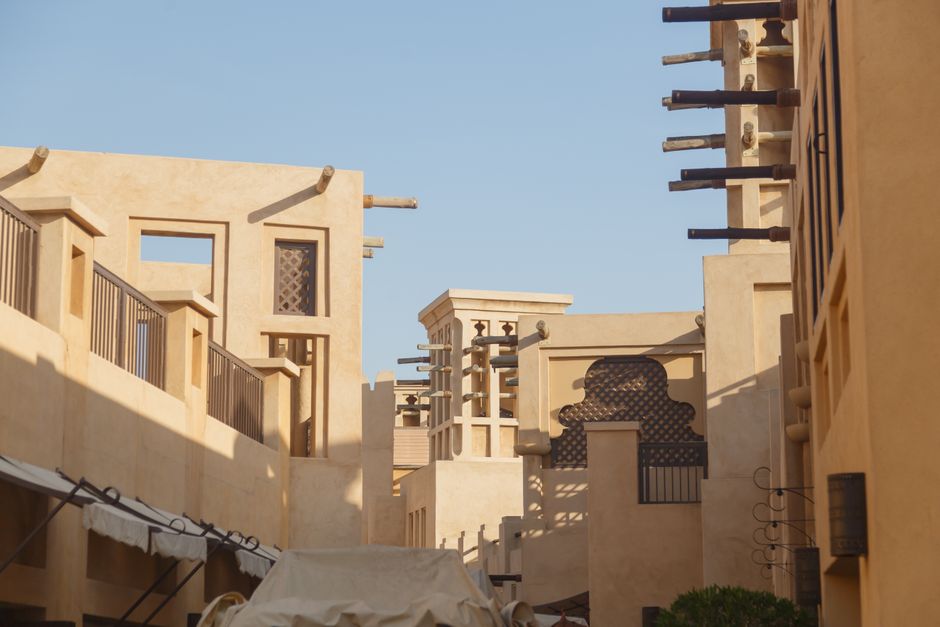
Walk along the manicured boulevards of Arabian Ranches on a Sunday morning, and you'll spot the unmistakable rhythm of Dubai family life: clusters of parents sipping coffee outside The Pantry Café while children pedal bikes toward the community parks, their school uniforms still creased from Friday's dismissal. This gated neighbourhood has become a blueprint for how Dubai's affluent families balance ambition with community, where villa prices averaging Dh3 million create pockets of stability in an otherwise transient city.
But the real character of Dubai's parenting landscape emerges not in the manicured developments, but in the eclecticism of neighbourhoods like Jumeirah and Al Wasl. Here, families from over 180 nationalities create something uniquely Dubai: schools like Jumeirah Primary School sit metres from family-run restaurants serving everything from Lebanese mezze to Indian thalis, while parents navigate a school system that spans British, American, Indian, and international curriculums. The cost variance is stark—international schools range from Dh20,000 to Dh80,000 annually—creating distinct micro-communities based on educational philosophy as much as geography.
Satwa and Al Manara tell yet another story. These older neighbourhoods, where rents hover around Dh1,500–2,500 monthly for two-bedroom apartments, host the teachers, nurses, and service professionals who form Dubai's backbone. Here, community isn't architected by developers; it emerges organically. Children play in shared courtyards, mothers gather at Spinney's and Carrefour, and schools like Al Noor School have cultivated intergenerational connections that span decades—something newer developments are still learning to foster.
The pandemic restructured these dynamics fundamentally. Neighbourhoods with strong outdoor amenities—Creekside Park's proximity to Karama, the beachfront access of Al Sufouh—became premium during lockdowns. Today, parents consciously choose addresses based on school proximity, co-working viability, and community infrastructure, not just price points.
What defines neighbourhood character in Dubai isn't nostalgia—the city is too young for that—but rather the intentionality families bring to their choices. Whether it's the structured community calendars in Arabian Ranches, the grassroots playground networks in Satwa, or the international school ecosystems in Jumeirah, each neighbourhood functions as a distinct parenting ecosystem. The next generation of Dubaiites isn't just inheriting a city; they're inheriting the specific community vibe their parents selected, one school gate, one neighbourhood coffee shop, one shared park at a time.
This article was compiled by AI from the sources linked above and screened before publishing. See our editorial standards.
How does this story make you feel?
Spread the word
About this article
Published by The Daily Dubai
Daily brief
Free, in your inbox before 7am. Weekdays.
More in lifestyle