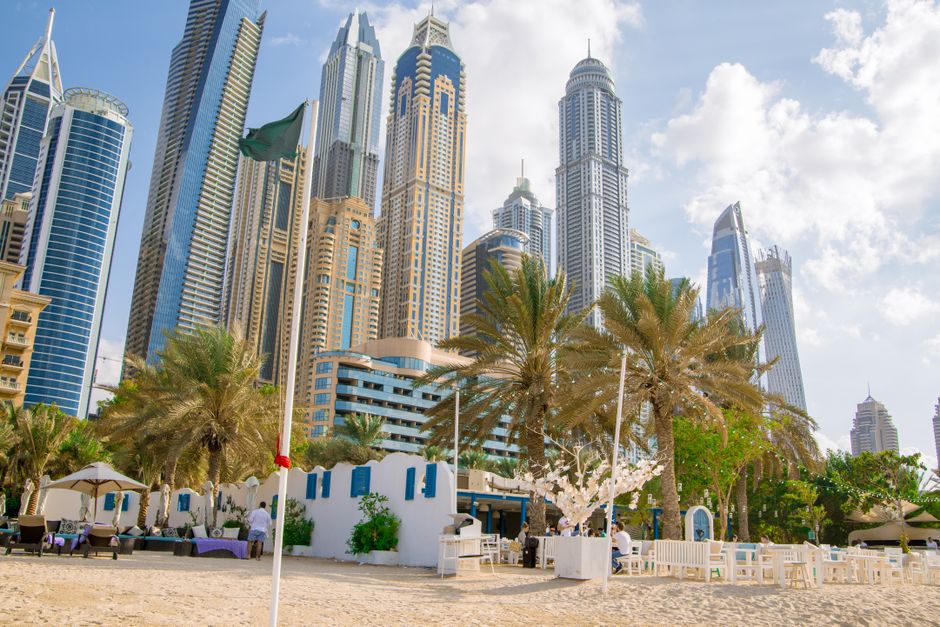
As major global cities grapple with sprawling governance structures and political gridlock, Dubai's streamlined administrative approach is delivering measurable results in tackling infrastructure and urban planning crises, according to urban development analysts tracking comparative municipal performance.
The contrast became apparent last month when the Roads and Transport Authority announced completion of the Al Khawaneej Street expansion project—originally scheduled for late 2027—six months ahead of schedule. The ART's ability to expedite approvals across the Dubai Municipality, Department of Urban Planning, and Crown Prince's Court reflects an organizational hierarchy that critics acknowledge sacrifices democratic oversight but delivers operational efficiency comparable to Singapore and Seoul.
"Dubai's single-authority model means fewer veto points," said Dr. Amelia Christensen, urban governance researcher at the London School of Economics, who has studied municipal systems across 47 cities. "What takes New York or London three years of community boards, environmental reviews, and city council votes happens in months here."
The efficiency extends to crisis management. During February's unexpected flooding in Business Bay and Deira, the municipality's integrated command structure mobilized 2,400 personnel and cleared blocked drainage systems within 48 hours—a response speed that contrasts sharply with Hurricane recovery timelines in Miami or Houston, where fragmented jurisdictions between counties, state agencies, and municipal bodies delayed coordination.
However, this organizational speed comes with trade-offs absent in Western cities. Dubai's governance model operates without elected municipal councils—a structure that Hamburg, Barcelona, and Toronto maintain despite slower decision cycles. Public consultation processes in those cities, while cumbersome, create accountability mechanisms Dubai's top-down system lacks.
The municipality's recent AED 4.2 billion budget allocation for 2026-2027 was announced without the public hearings that Australian or Canadian cities require. Yet implementation has proven swift: 156 new parks across Jumeirah, Deira, and Satwa are now operational, compared to the estimated 18-month timelines typical for similar projects in Toronto or Melbourne.
Urban planners observing Dubai's approach highlight a paradox: governance structures optimized for rapid execution often struggle with long-term accountability and course correction. While the Department of Urban Planning's Vision 2040 framework provides strategic consistency, citizens in traditionally democratic cities retain mechanisms to challenge decisions Dubai's residents cannot access institutionally.
As global cities increasingly prioritize efficiency amid climate pressures and infrastructure demands, Dubai's model serves as a case study—not necessarily for emulation, but for understanding the genuine trade-offs between speed and democratic participation in urban governance.
This article was compiled by AI from the sources linked above and screened before publishing. See our editorial standards.