Dubai's New Zoning Rules Reshape Affordability Map as Developers Pivot Away from Mid-Market Supply
Recent planning amendments favouring mixed-use development in emerging zones are reshuffling where young professionals can actually afford to buy.
Recent planning amendments favouring mixed-use development in emerging zones are reshuffling where young professionals can actually afford to buy.

Dubai's property affordability equation has tilted sharply in the past 18 months, and the culprit isn't simply market appetite—it's policy. Recent zoning amendments and Dubai Municipality's revised planning guidelines have quietly redirected developer investment away from traditional mid-range corridors, creating a two-tier market that's leaving first-time buyers scrambling.
The average price per square foot across Dubai remains anchored around AED 1,600, but that figure masks a widening divergence. Downtown Dubai and Palm Jumeirah continue commanding premium positioning, with waterfront units in JBR maintaining their appeal to investors. But the real story is what's happened to the middle ground.
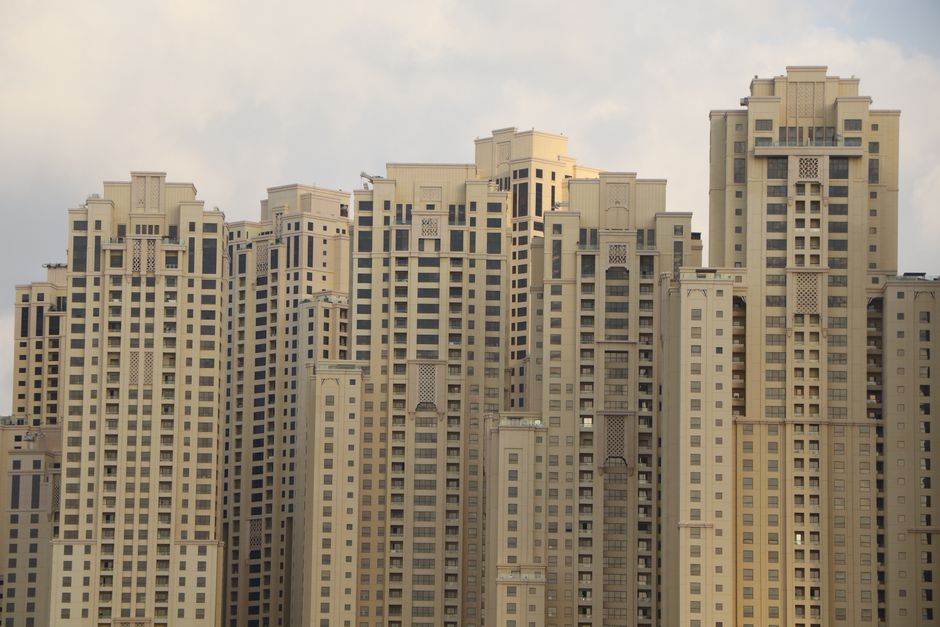
When the Dubai Land Department introduced amendments to mixed-use zoning regulations last year—allowing greater commercial integration in residential clusters—developers capitalized immediately. Large-scale projects pivoted toward high-rise, high-margin apartment typologies rather than the mid-sized, affordable residential offerings that once anchored communities like JVC and JLT. The yield-hunting investor follows policy like a compass needle, and yield follows scarcity.
These planning decisions have had immediate consequences. Data from the first half of 2026 shows developers launching fewer units in the AED 800,000–AED 1.2 million range—precisely where first-time buyers and young families were gaining traction. Instead, supply has concentrated at either end: ultra-luxury Downtown parcels and, paradoxically, ultra-compact studios in emerging secondary zones where regulatory incentives reward density.
The 10-year Golden Visa programme has amplified this effect. While investor demand from residency seekers has bolstered prices in established nodes, it hasn't translated into affordable inventory. Policy designed to attract capital has instead compressed supply precisely where affordability matters most.
Emerging zones like Ras Al Khor and certain parcels in Dubai South are now absorbing displaced mid-market demand, though infrastructure maturity lags investor confidence. The trade-off between affordability and location—long a Dubai reality—has sharpened considerably.
What's notable is that these aren't market failures; they're policy-driven outcomes. Dubai's planning framework, designed to optimize land value and encourage mixed-use urbanism, has inadvertently narrowed the pathway for median-income buyers. Whether future amendments will recalibrate supply toward affordability remains unclear, but one fact is certain: understanding today's Dubai property market requires reading the zoning map as closely as the price list.
This article was compiled by AI from the sources linked above and screened before publishing. See our editorial standards.
How does this story make you feel?
Spread the word
About this article
Published by The Daily Dubai
Daily brief
Free, in your inbox before 7am. Weekdays.
More in Property