Dubai's luxury property market has long pivoted on the gravitational pull of iconic addresses—Palm Jumeirah, Downtown Dubai, the Emirates Hills ridge. But a series of planning decisions announced by Dubai Municipality and the Real Estate Regulatory Agency over the past eighteen months is quietly rewriting the investment map for high-net-worth buyers.
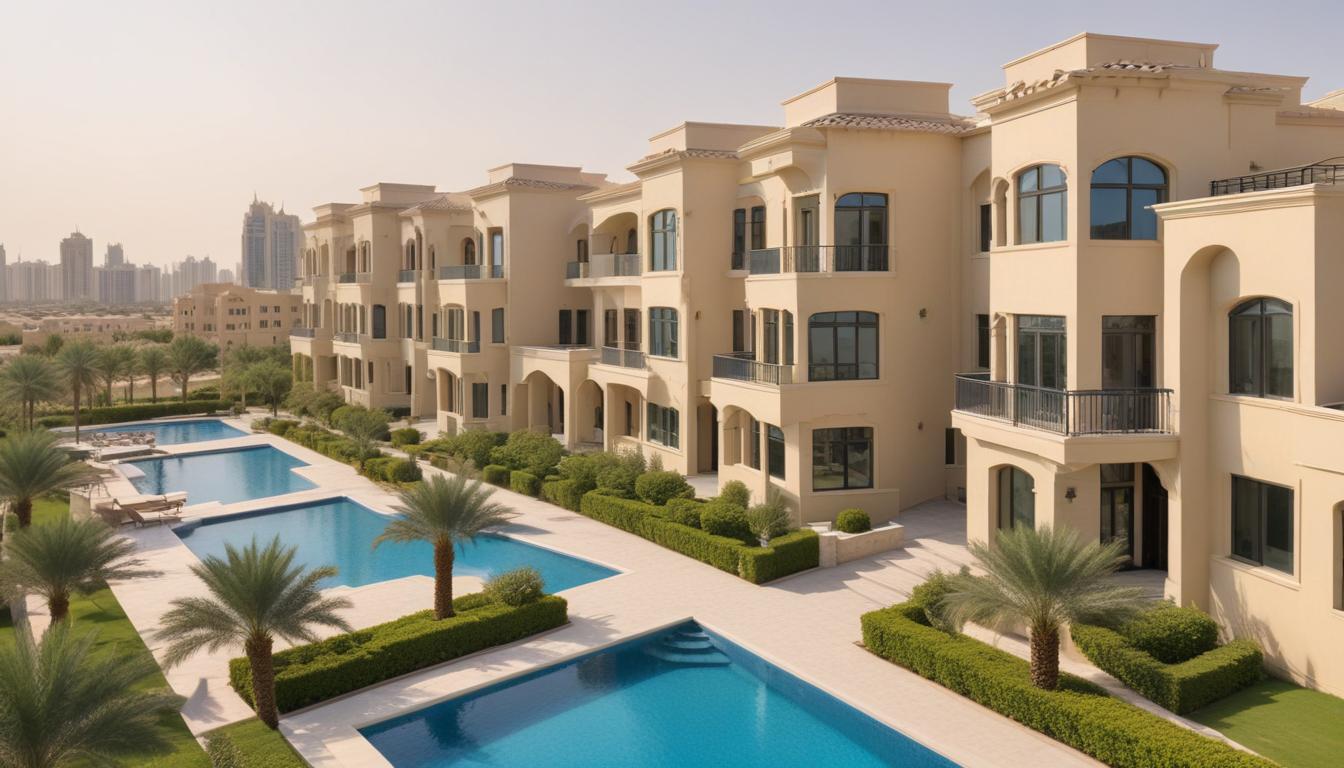
The most significant shift involves revised density regulations in peripheral prestige zones. New master plans for areas bordering Arabian Ranches III and the Mohammed Bin Rashid City extension have relaxed previous height and footprint restrictions, effectively licensing developers to create larger-format ultra-luxury villas and townhouses. Industry observers note this represents a deliberate policy lever—spreading demand beyond the constrained supply of Palm Jumeirah's remaining plots, where prices have stabilized around AED 15,000–18,000 per square foot for premium waterfront positions.
"Regulatory congestion in legacy luxury zones creates artificial scarcity," explains the thinking behind RERA's updated zoning framework. The result is measurable: transactions in Arabian Ranches II and the emerging Villanova development corridor jumped 34% year-on-year through Q1 2026, with average prices climbing to AED 8,500–11,000 per sqft—still a discount to Downtown Dubai penthouses, yet commanding investment-grade appreciation trajectories.
A second policy layer concerns retail and leisure anchoring. Dubai's Department of Urban Planning has fast-tracked commercial licensing for lifestyle precincts adjacent to major residential clusters. The Wasl District expansion near JBR, combined with streamlined approvals for fine-dining and wellness venues in DIFC's northern extension, has visibly lifted amenity perceptions—and asking prices—in nearby residential stock. Properties within 1.5 kilometres of these approved leisure nodes have seen 12–16% premium uplift versus comparable units in less-anchored zones.
Sustainability mandates form a third policy vector. New building codes requiring LEED Gold certification or equivalent have driven development costs upward, but luxury buyers increasingly view compliance as a status marker and long-term risk mitigation. Developers pricing sustainable luxury at a 8–12% premium over conventional high-end stock are finding traction, particularly among Middle Eastern and Asian family offices seeking ESG-aligned asset allocation.
The cumulative effect is a fractured market. While Downtown Dubai and Palm Jumeirah remain aspirational anchors, policy-enabled zones are capturing a growing slice of ultra-high-net-worth capital. Agents report enquiry patterns shifting toward emerging prestige addresses—a divergence from the concentrated demand patterns of five years prior. For investors, the message is clear: tomorrow's trophy assets may lie not in yesterday's established enclaves, but in the neighbourhoods where policy has just granted permission to build them.
This article was compiled by AI from the sources linked above and screened before publishing. See our editorial standards.