What Dubai's Luxury Auction Results and Price Data Are Signalling About the High-End Market
Record-breaking sales in Downtown and Palm Jumeirah suggest a bifurcated market where ultra-premium properties defy broader slowdowns.
Record-breaking sales in Downtown and Palm Jumeirah suggest a bifurcated market where ultra-premium properties defy broader slowdowns.
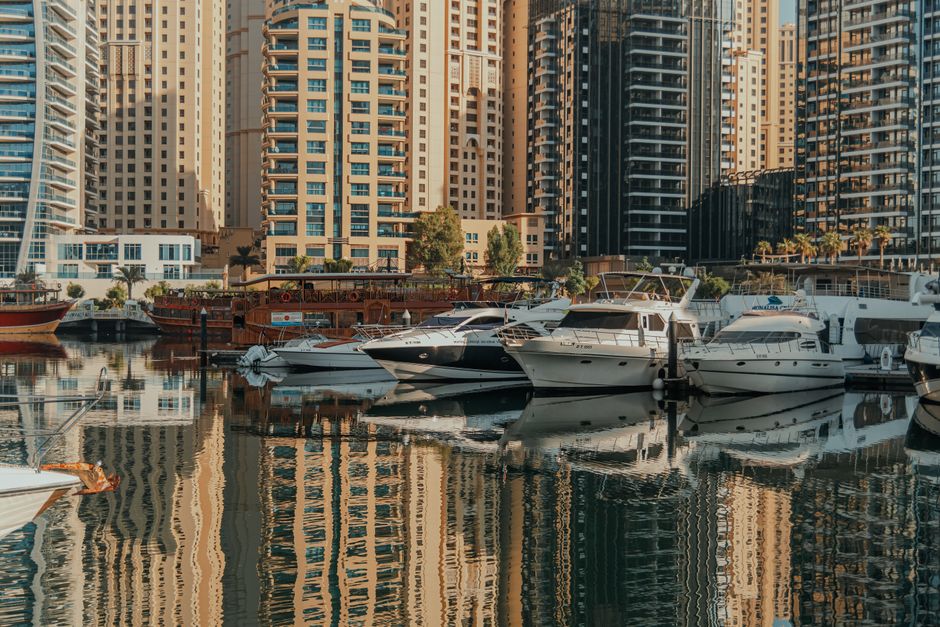
Dubai's luxury property market is sending mixed signals. While mid-range developments across JVC and JLT continue to stabilise around yield-focused metrics, the prestige segment—epitomised by Downtown Dubai and Palm Jumeirah—is broadcasting a distinctly different narrative through auction results and price momentum.
Recent auction activity at the Dubai Land Department reveals telling patterns. Properties in the sub-AED 5 million bracket have experienced modest transaction velocity, yet ultra-prime assets—those commanding AED 10 million and above—have shown resilience that defies the broader market's caution. A string of high-value closures across the Burj Khalifa environs and waterfront Palm properties suggests that the ultra-wealthy buyer segment remains active, undeterred by macroeconomic headwinds affecting mass-market purchasers.
Price-per-square-foot data underscores this divergence. While Dubai's citywide average hovers around AED 1,600/sqft, comparable units in Downtown's premium zones have held firm at AED 2,800–3,200/sqft—a metric that would typically soften during market corrections. Palm Jumeirah villa transactions have similarly resisted downward pressure, with beachfront properties maintaining AED 3,500+/sqft benchmarks.
The 10-year golden visa programme has catalysed this phenomenon. Auction records show a pronounced cluster of acquisitions by visa-eligible ultra-high-net-worth individuals, particularly from GCC nations and Asia-Pacific markets. These buyers are purchasing not for yield, but for long-term asset preservation and residential prestige—a behaviour that insulates luxury properties from cyclical pressures affecting investor-focused segments.
What the data signals, however, is structural bifurcation. Properties positioned as investment vehicles—particularly in JBR and mid-tier JLT developments—face headwind from rising interest rates and cooling rental yields. Conversely, owner-occupier trophy assets command auction premiums that defy traditional valuation logic. A recent penthouse transaction near the Emirates Towers reportedly exceeded asking price by 12 per cent, an outcome virtually absent in the sub-AED 2 million segment.
This polarisation will likely intensify. The prestige market's resilience stems from a fundamentally different buyer psychology: emotional attachment to legacy assets and portfolio diversification, rather than IRR calculations. Auction volumes at the luxury tier remain modest but steady, signalling that while deal flow has contracted, prices have stabilised—a signal the ultra-premium segment has found its floor.
For investors and agents, the message is unambiguous: Dubai's luxury market has decoupled from mainstream cycles. Ultra-prime properties are trading in a parallel ecosystem, one shaped by global capital flows and visa-driven demand rather than local economic sentiment.
This article was compiled by AI from the sources linked above and screened before publishing. See our editorial standards.
How does this story make you feel?
Spread the word
About this article
Published by The Daily Dubai
Daily brief
Free, in your inbox before 7am. Weekdays.
More in Property