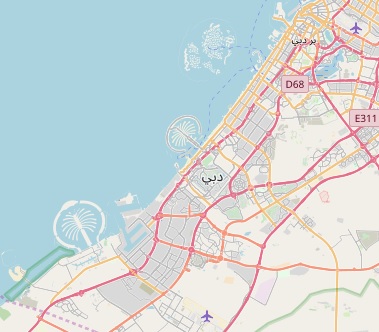
Dubai's reputation as a global business hub continues to attract ambitious professionals from across the world. With an estimated 500,000 expatriate workers and counting, the emirate's job market has become increasingly competitive—and increasingly targeted by cybercriminals exploiting the mobility and urgency of career seekers.
Recent trends highlight a growing concern: fraudulent job postings and recruitment scams are proliferating across LinkedIn and WhatsApp, particularly targeting professionals in Business Bay, the Marina, and Downtown Dubai. Scammers impersonate HR departments of legitimate multinational firms, requesting upfront payments for visa processing or security deposits. The Dubai Economic Department and UAE Cybersecurity Council have flagged this as a critical vulnerability, with job seekers losing an average of AED 3,500 to AED 15,000 per incident.
"The golden rule is simple: legitimate employers never request money before employment," explains workplace security guidance from Dubai's Chamber of Commerce. Yet desperation and time pressure often override caution, especially among newcomers unfamiliar with local hiring norms.
Beyond recruitment fraud, professionals must safeguard personal data shared during job applications. Many job platforms and employer databases operate with minimal encryption standards. A practical step: use a dedicated email address for job applications rather than personal accounts linked to banking or sensitive services. Enable two-factor authentication on LinkedIn, Indeed, and similar platforms—a measure adopted by fewer than 40% of Dubai-based professionals despite easy setup.
Company networks pose another risk. With hybrid work models now standard at major employers across Sheikh Zayed Road and the Palm Jumeirah, many professionals connect to office systems via personal devices. Using public WiFi at JBR cafés or Jumeirah Beach venues to access work files—a common practice—leaves credentials vulnerable to interception. VPN services (AED 15-50 monthly) provide essential protection but remain underutilised.
Data privacy also extends to employment contracts and background checks. The UAE's Personal Data Protection Law (2021) grants workers rights over how employers collect and store personal information. Before signing contracts at offices in Downtown Dubai or Al Baraka, professionals should request clarity on data retention policies and third-party access.
The practical toolkit: verify job postings through company websites directly (not links in emails), use password managers to generate unique credentials for each application, and report suspicious recruitment activity to the UAE Cybersecurity Council's hotline. For those relocating internationally, avoid sharing passport details or bank information until employment agreements are signed.
In a city where opportunity and risk move at equal velocity, digital hygiene isn't optional—it's professional survival.
This article was compiled by AI and screened before publishing. See our editorial standards.